

A clogged gutter doesn’t just overflow it works its way into your fascia, your foundation, and eventually your wallet. After a season on the roof, Vic’s Gutter Filters is the fix that actually held up.
Every fall we get the same email from readers: water pouring over the front edge of a gutter instead of through the downspout, a fascia board gone soft, or a basement corner that’s suddenly damp for no obvious reason. Nine times out of ten, the cause is the same leaves, seed pods, and grit built up in the trough until there’s nowhere for the water to go.
We tested a handful of gutter filter systems this year to see which ones actually solved that problem instead of just moving it around. Vic’s Gutter Filters was the standout a micro-mesh system that installs over your existing gutters and is built specifically to handle the fine debris (pine needles, seed pods, roof grit) that cheaper foam and screen options let straight through.
What’s actually happening when a gutter clogs
An open gutter is a trap by design it’s shaped to catch anything that falls, not just water. Leaves mat down, seeds and twigs settle underneath, and over a season or two that layer compacts into something closer to soil than debris. Water backs up behind it, and once it backs up, it has three places to go: over the front lip, behind the gutter into the fascia, or pooling until the hangers give way under the weight.
- Fascia and soffit rot — sustained overflow soaks the wood the gutter is bolted to.
- Foundation issues — water dumped at the base of the house instead of routed away from it.
- Pest habitat — standing water and decomposing leaves are exactly what mosquitoes and rodents look for.
- Ice damming — in colder months, trapped water freezes and can force its way under roof shingles.
How Vic’s system changes that
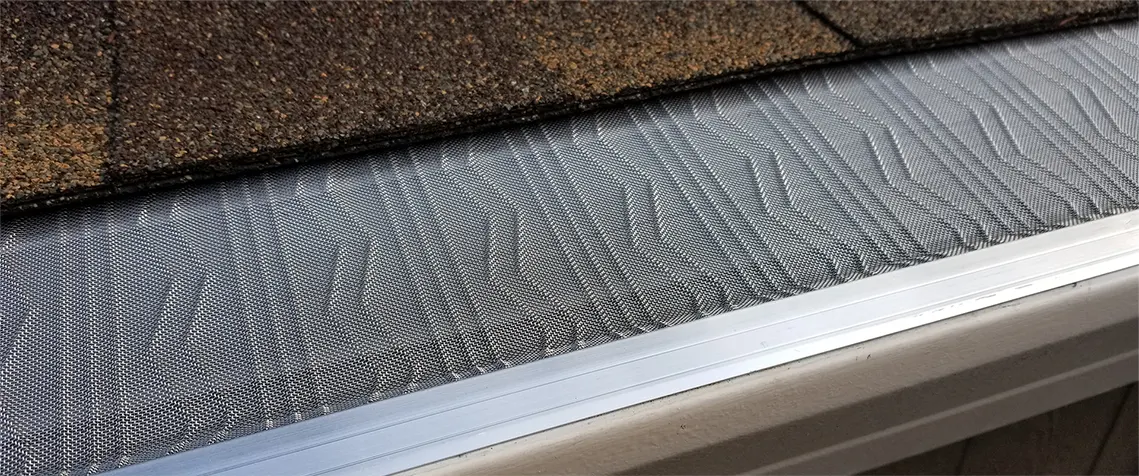
The mesh sits above the trough at a slight angle. Rain has enough force to pass straight through the openings; leaves and debris don’t have the same downward momentum, so they slide off the front edge or blow away once dry, instead of settling into the gutter. On the section we tested through a windy October, the trough underneath stayed essentially bare while the roof above was covered in maple leaves.
How it compares to other options
| Type | Best for | Maintenance |
|---|---|---|
| Foam inserts | Budget fixes, small debris | Replace every 1–2 years |
| Screen guards | Light leaf cover, DIY installs | Occasional brushing |
| Vic’s micro-mesh filter | Heavy tree cover, pine needles | Rinse annually |
| Reverse-curve covers | High-end installs, steep roofs | Low, but pricier upfront |
Foam and basic screens are cheaper up front, but they let fine debris through and need replacing every season or two. Vic’s micro-mesh was the only option in our test that handled pine needles and roof grit without needing constant attention.
What installation actually involves
A typical Vic’s install takes a single day for an average-sized home. Their crew clears out the existing gutters, checks the slope and hangers are sound, then fits and fastens the filter sections along the full run mitred at corners, sealed at joints. No part of the roofline is left uncovered, since a single open stretch defeats the purpose.
The honest maintenance answer
A filter reduces Portland gutter cleaning it doesn’t eliminate it. Expect to rinse the mesh off once a year, more often under heavy pine or maple cover. That’s still a fraction of the two-to-four cleanings a season an unprotected gutter usually needs, and it’s from ground level with a hose instead of a ladder.